
MOMOTARO JEANS
14 items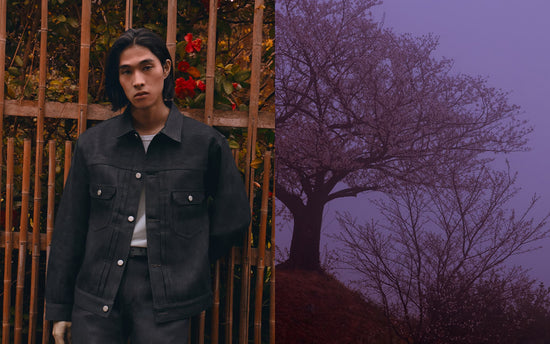
Japanese Selvedge Denim
50 items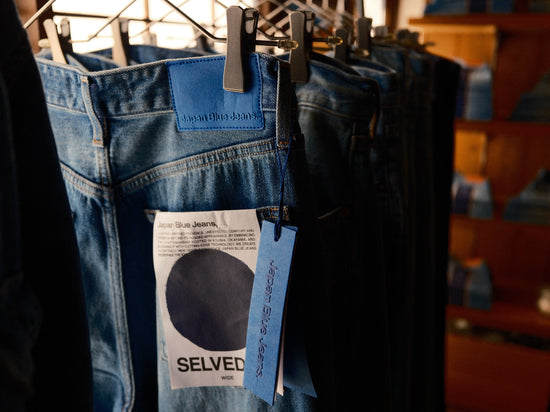
Iron Heart
10 items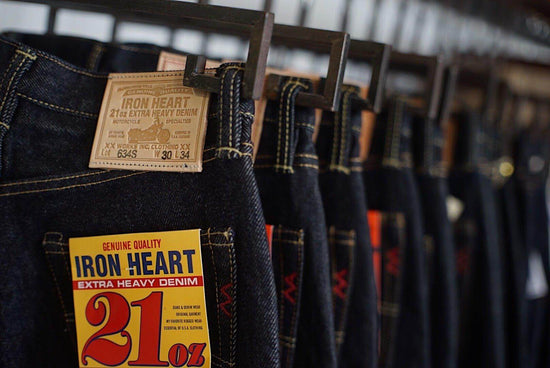
TCB Jeans
29 items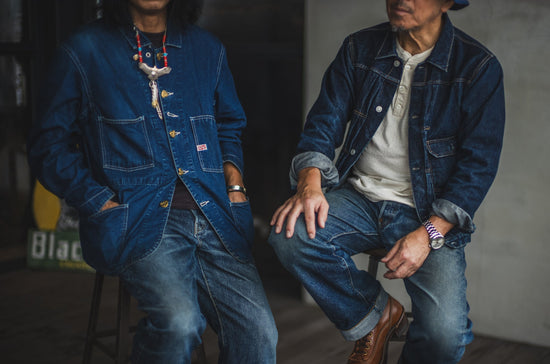
Tanuki Denim
5 items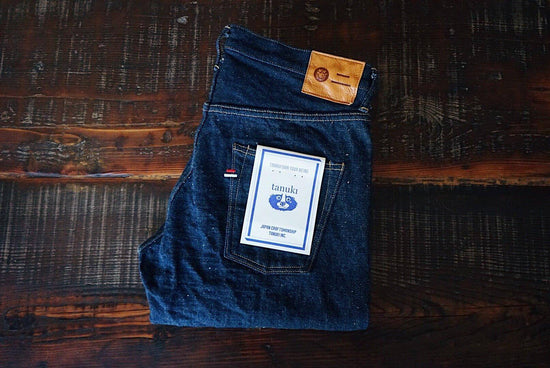
Double Helix
13 items


All Momotaro jeans are made in Kojima, Okayama — the town widely regarded as the origin of Japanese denim production. The brand works with local mills, dyers, and finishers, many of whom have been producing denim in the same location for decades.
Momotaro sources long-staple cotton from Zimbabwe — one of the few remaining origins producing fibre of this quality. It produces a stronger, smoother yarn than most commercially available alternatives, and is central to the density and hand of the finished fabric.
Momotaro has both raw and washed products. By applying a process that minimizes shrinkage after washing to the utmost extent, it reduces the drawbacks of raw (unwashed) fabrics and alleviates concerns about size selection. If you are unsure, contact us before ordering.
Turn inside out, wash in cold water on a gentle cycle, and hang to dry away from direct sunlight. Many wearers wash infrequently — particularly in the first months of wear — to allow the fading pattern to develop naturally. Cold water and low agitation will extend the life of the fabric and the depth of the colour.
Yes. We offer hemming on all jeans purchased in-store or online. Chain-stitch hemming is available, which preserves the original construction method and allows the roping effect to develop at the hem as the jeans age. We recommend this for any pair intended for long-term wear.
Momotaro sits within the same tradition as Iron Heart, TCB Jeans, and Tanuki — brands that use shuttle-loom selvedge fabric and traditional construction methods. The distinction lies in the cotton: Zimbabwe long-staple gives Momotaro fabric a particular density and smoothness. The brand also tends toward a cleaner aesthetic than Iron Heart, with slightly lighter fabric weights across most of the range.
We stock a considered selection from the Momotaro range, chosen for fit, fabric weight, and suitability for long-term wear. If you are looking for a specific style or have questions about what is currently available, get in touch and we will advise you directly.
Yes. Our denim repair and alteration service is available regardless of where the jeans were purchased. We work on all selvedge and raw denim, including repairs to worn knees, seat areas, crotch blowouts, and structural seaming. If a pair is worth keeping, it is worth repairing properly.